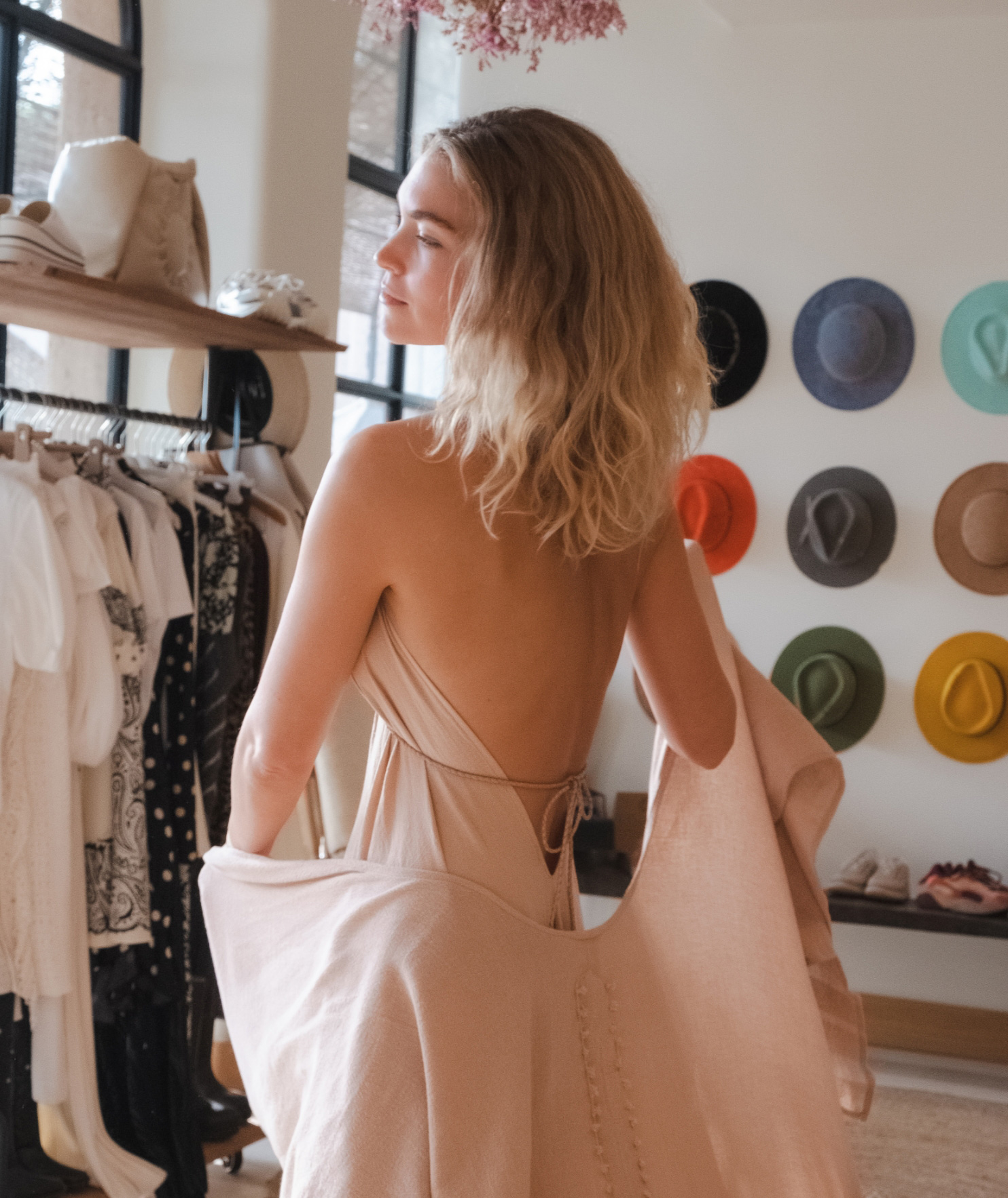
Artem del Castillo
My journey actually started with my first brand, Delos and later with Caravana. As a group, the two brands share a dedication to everything I truly believe in – artisanship, expressive clothes, sustainability and social responsibility. In my work I found a real disconnect: the rise of this beautiful, graceful world of craft – and the reality of what my clients were actually wearing and what resources were available. So, I started researching fabrics and how they connect to the elements. I went to India and Mexico to learn from artisans on the ground and to see how crafts passed down through generations could be modernised – made sexy – and brought into the contemporary world.
The problem was the supply chain. Small, delicate operations don’t map neatly onto the long “journey of a dress”. Our pieces take so much time but they give us the opportunity to work with incredible communities – many artisans living week-to-week – and to create something that truly sustains them.
Arizona Muse
That is a beautiful story to hear. For context: I’ve been a fashion model for almost 14 years. For many of those years I felt profoundly unwell – mentally and physically – and I couldn’t figure out why. This was before mental health was openly discussed. My path into activism healed me. And by activism, I mean something gentle: kindness, encouragement, acceptance. We often think activism is loud or combative; it doesn’t have to be. I invite everyone here to find your inner activist – the part of you that wants to stand for a new truth.
For me, that meant falling in love with the Earth – this mother we all belong to but were taught to ignore. I was taught to walk past plants without acknowledging them. I’m not okay with that anymore.
Fashion is also tied to mining – think buckles, zips, metal trims. Historically, mining was ceremonial and reverent; today it’s extractive and toxic. Our work at DIRT is about restoring that sense of reverence in everything we touch.
We’re currently fundraising to build a system with Demeter, the biodynamic certifier best known in food and wine, so they can certify textiles – from the land where fibres grow (cotton, wool, leather, cashmere, tree fibres) to the dyes that are used, to ensure biodiversity, non-toxic processing and fair pay. It’s detailed, unglamorous work – but exciting. We recently finished the first of ten standards: dyestuffs. Dyehouses are often the most toxic link – if you look at river footage near dye facilities and you’ll see purple, foamy waterways. Our oceans are suffering deeply from agriculture and fashion. Every purchase we make is a chance to consciously back better systems and there are countless opportunities to reduce harm. One immediate fix: stop built-in overproduction. Retailers often require brands to make 5–20% extra units “just in case.” That waste is designed into the system.
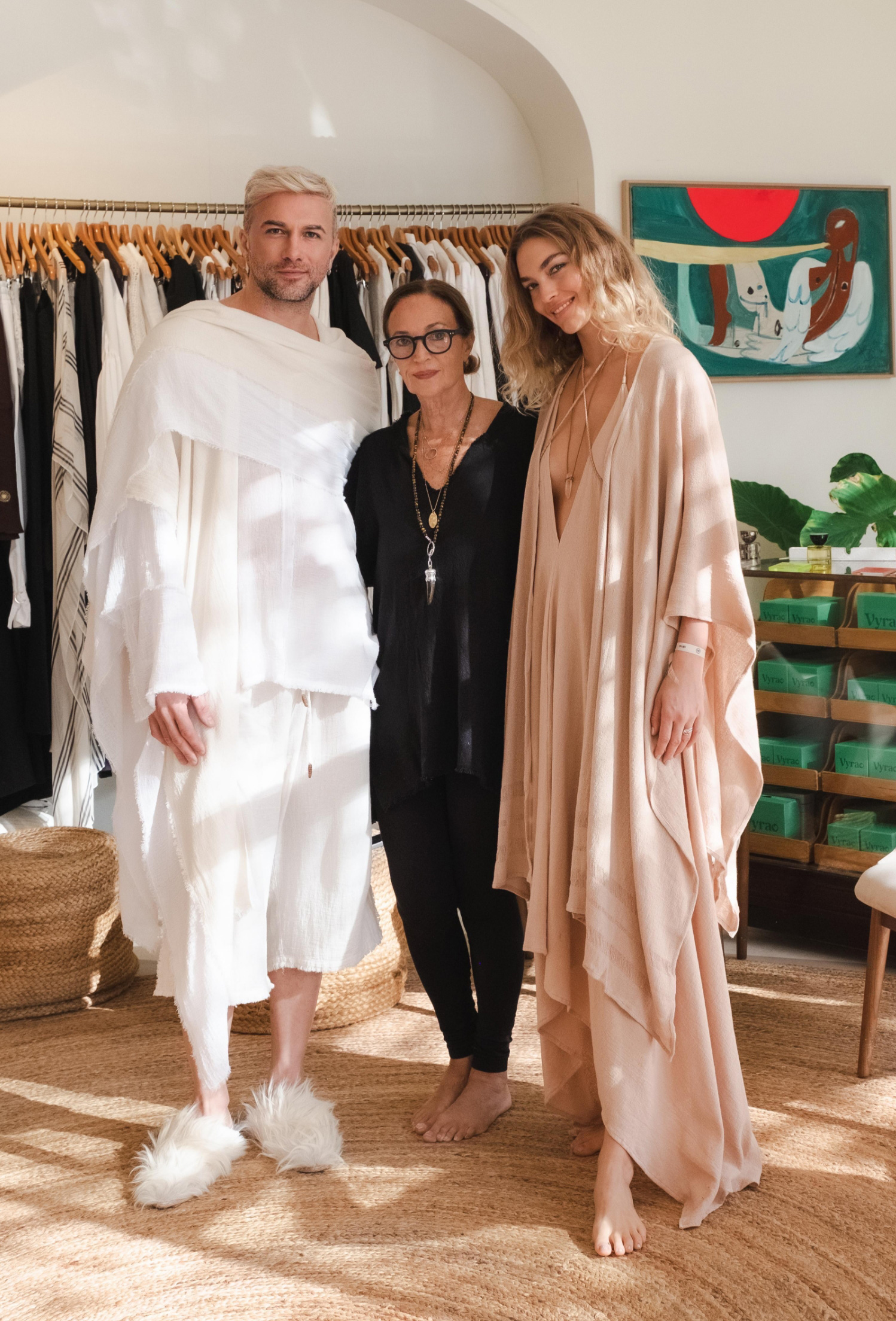
Agora IbizaArtem del Castillo
When I started thinking about this 15 years ago (and launched five years later), I kept repeating: the world doesn’t need another dress. If you create, it must have meaning. That’s where Caravana has depth. Fashion should transport you. But the reality is brutal: huge brands overproduce and sometimes burn unsold goods to protect brand image rather than discount. It’s heartbreaking – exquisite work destroyed.
Working with artisans is incredibly tough and incredibly rewarding. Many are not trained as “businesspeople”; but they’ve been dying, weaving, stitching since childhood. We’ve partnered for seven years with a woman in Delhi who began as a tireless young entrepreneur and is now running a unit with master artisans. When we met, no one knew aqueous-free or non-toxic dye processes; harsh chemicals were the norm. We do a lot with shibori – once you see the dye volumes and where they go, it’s scary.
In Mexico, Caravana has helped build a community – homes, education, stability. More businesses must do this. Some luxury houses do (Loewe’s craft projects are great), but many high-street brands greenwash – “organic cotton” t-shirts for €9.99 can’t possibly reflect fair labour or healthy soils.
And storytelling is essential. I’ve watched customers light up when they hear who made a piece, how long it took, why it matters. That’s what turns a “mop” on a hanger into something electric on the body. The term “quality” is unregulated – true quality feels different. Department stores need to change: miles of rails don’t tell stories. Shoppers need the real cost behind a price tag.
If you’re fortunate, it’s your responsibility to spend more, buy less and support small, sustainable brands. There’s joy in that exchange, and a human on the other side who sees your order.
I also believe we live in the era of resortwear – not just beach clothes, but climate-appropriate, light, functional, beautiful garments for a hotter world and a travel-driven culture. The category is growing fast. Historically resortwear was a compromise—now it deserves ceremony and style. In an ideal future we localize: make in-place, with local resources and culture, and sell locally – though we’re still far from that.
Arizona Muse
There’s another layer to this: care. If we design for longevity – natural fibres with repairable construction – we also need to revive the culture of keeping clothes alive. Mending, re-dyeing, re-blocking a hat, replacing ties on a dress – these are small rituals that keep garments in our lives. Imagine if every brand sold a care kit or hosted a monthly mend-and-learn. Activism can be domestic and joyful, too. And traceability matters. I don’t need a QR code to be sexy, but I do want a truthful one.
If I can scan a label and meet the farm, the mill, the dyer, and the atelier, that’s a story I’m proud to wear. It collapses distance; it builds trust.
We should also be honest that access is an issue. Sustainable garments often cost more upfront. I support rental and repair models and community wardrobes – ways of sharing beauty without multiplying extraction. If we normalize renting a showpiece for a night and buying a handful of forever pieces, we change the math.

“Our oceans are suffering deeply from agriculture and fashion. Every purchase we make is a chance to consciously back better systems and there are countless opportunities to reduce harm.”“Our oceans are suffering deeply from agriculture and fashion. Every purchase we make is a chance to consciously back better systems and there are countless opportunities to reduce harm.”Artem del Castillo
On our side, we’re experimenting with batching and made-to-order windows – opening a design for two weeks, producing exactly what’s needed and publishing lead times. It respects the artisan’s cadence. It also means telling customers: slowness is a feature, not a flaw. The dress arrives with a calendar of hands – who touched it, when, how long. People respond to that intimacy.
We’re also mapping micro-supply chains: dye gardens next to weave houses, leather braided within a day’s travel of the tannery, buttons carved from local wood rather than imported metal. It’s not perfect, but every kilometre removed is a small victory. And yes, we fly less – consolidated shipments, sea freight when possible, staggered drops tied to place (Mexico for the Americas, India for Asia/Europe) so pieces don’t ping-pong the globe.
Arizona Muse
And we have to talk about materials literacy. Clothing labels are confusing by design. Natural doesn’t always equal benign; a poorly grown cotton can be worse than a well-stewarded wool. With the Demeter work on dyestuffs, we’ve started where harm is loudest – but the goal is a holistic standard that recognizes soil health, water cycles, human health and cultural continuity. If a fibre is gorgeous but erases a tradition or poisons a river, it’s not luxury – it’s loss.
Artem del Castillo
Exactly. Luxury is relationship – to place, to process to people. That’s why distribution is our current knot to untangle. Traditional retail asks: “Which floor are you? Evening or beach?” We’re neither and both. Our best partners are creating resortwear floors and training teams to tell the story. Because on a hanger, Caravana can look minimal – no shoulder pads, no metal, no scaffolding. On a body, with context, it’s architecture in motion.

caravana.land“Working with artisans is incredibly tough and incredibly rewarding.”“Working with artisans is incredibly tough and incredibly rewarding.”